Is your dog secretly a midnight mischief-maker?
It’s not rare for dogs to be perfectly behaved when everyone’s up and about, but become sneaky during the nighttime hours, leaving surprises for you to discover at dawn.
Hopefully, you’re not coming across these nocturnal ‘gifts’ the hard way, like stepping on them first thing in the morning. The frustration of such experiences is immense, I bet.
But fret not! With some tweaks to your daily routine and a little refresher in training, you can soon look forward to more pleasant mornings. Say goodbye to unpleasant surprises!
When Does Your Dog Dine? Although it varies, most dogs tend to relieve themselves shortly after they eat.
Food typically takes between 8 to 12 hours to journey through a dog’s system. So, it’s quite probable that the last meal they had is responsible for their next ‘business’.
Some dogs have more frequent bathroom habits than others. For instance, while Cow consistently goes three times a day, Matilda does so just once. Their routines have evolved over time based on their diets, but I’ve now got a good grip on their patterns. For example, I’ve observed that Cow usually needs to go first thing after waking up, whereas Matilda typically goes around noon.
You’ll likely find it simpler to gauge your dog’s habits if you walk them, instead of just letting them loose in the yard. If multiple people care for the dog, keep each other informed. This collaborative approach can help you understand their pattern better.
Finding the right feeding time depends on both your and their schedules. I typically serve meals around 7 AM and 5 PM, with the occasional treat in between. Given this schedule, it’s not surprising that Cow feels the need to go early in the morning.
If nighttime disturbances or accidents were an issue, I might consider moving dinner time a bit later. Alternatively, feeding them earlier might help ensure they’ve finished their business before bedtime.
Nighttime Confinement A dog that’s prone to nighttime accidents shouldn’t have unrestricted access to your home during sleeping hours.
Consider crating them. Ensure the crate’s placement allows you to detect any signs of restlessness, signaling a need for a bathroom break. If crating is new to them, make it comfortable and respond promptly when they make noises, ensuring a smooth transition.
Alternatively, you can have your dog sleep in your bedroom, so you can pick up on any cues like scratching or whining. Waking up for a quick outing might seem annoying, but it’s certainly better than dealing with messes. With time, you can gradually align their potty times with yours.
Is Your Dog Signaling Their Needs? All dogs, once in a while, may need a middle-of-the-night outing.
If they’ve been trained to a routine but suddenly need to go out, it could be due to various reasons like overindulgence in treats or water.
Some dogs have a clear way of signaling their needs – a bark, a stare, or door scratches. If yours doesn’t, consider tools like potty bells or voice buttons to help them communicate better.
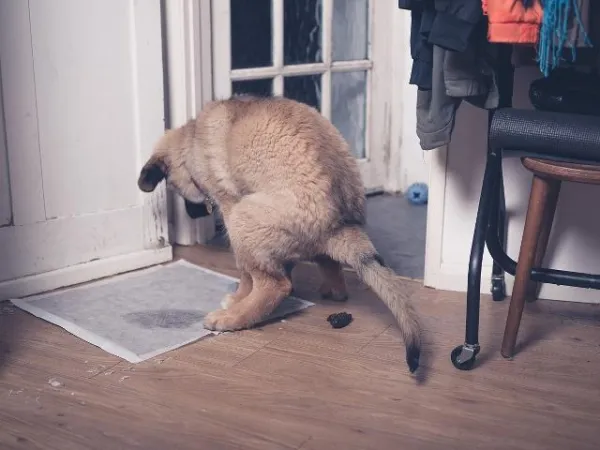
What About Overnight Potty Pads? Using potty pads occasionally, especially when outdoor outings aren’t possible, is alright.
In certain situations, like an unsafe neighborhood or physical limitations, midnight outings might not be feasible. While turning to potty pads might feel like regression, view it as a helpful tool. It provides your dog an acceptable alternative, ensuring you both have a better start to the day.
Relying on pads occasionally doesn’t mean your dog will always depend on them. In general, the great outdoors is more appealing to most dogs, but a pad provides a comfortable option during unpleasant weather.