Ever noticed a strong, fishy, and slightly metallic scent when your dog gets anxious or agitated?
That’s the infamous handiwork of your dog’s anal glands.
Consistently, Matilda emits this odor around new faces or when something intriguing catches her attention outside. If she’s in my arms during one of these moments, my outfit gets adorned with a couple of small oily brown spots.
It’s evident that some dogs are more “vocal” with their glands than others. Curious to know if Matilda’s behavior was natural or if it signaled the need for extra care, I delved into some research – the results were enlightening.
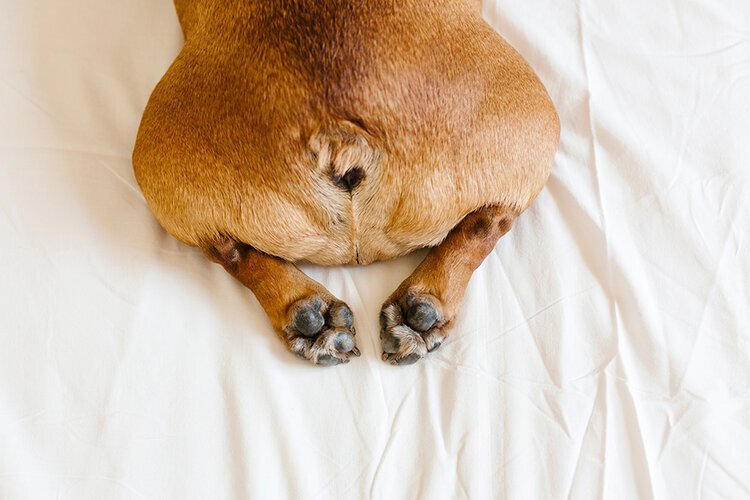
Understanding Your Dog’s Anal Glands These glands sit on either side of your dog’s rear end. They bear a close resemblance to the glands in skunks, which release a defensive spray when threatened.
However, while a dog’s anal glands might act up when they’re alarmed or stressed, their secretion doesn’t spray like a skunk’s. It’s also not a conscious choice by the dog. Whereas a skunk’s secretion can temporarily impair vision, a dog’s is just a short-lived inconvenience.
The primary role of these glands in dogs is to convey scent messages to their counterparts. They usually get emptied during defecation. We often associate dogs with marking territories through urination. Less commonly known is that their anal glands play a similar role.
When dogs meet, they often sniff each other’s rears – this is them reading the gland’s scent signals. A dog’s anxiety level at the time of meeting is reflected in this unique scent.
In certain cases, due to persistent gland complications, vets might surgically remove them. Although it might affect the dog’s communication abilities, it could be vital for their overall well-being.
Why Some Dogs Struggle with Overactive Anal Glands In some canines, these glands might not drain adequately post-defecation.
Diet can influence this. Soft feces might not exert the needed pressure on the glands for complete emptying. Hence, supplements meant for anal gland health tend to be rich in fiber to ensure the stools are sizable and firm.
Unemptied glands might discharge when a dog is either overly excited or scared, or even during their slumber.
If not emptied regularly, the stored fluid might solidify, leading to painful blockages, potential infections, or even rupturing. Given their build, small breeds are more susceptible to these issues.
Considering their numerous health challenges, it’s not surprising that smaller breeds face more problems with their anal glands. Matilda, a petite Chihuahua mix, seems to have more frequent gland issues than many others.
Preventing Anal Gland Issues While Matilda has had no blockages or infections, she does leave a scent trail when she’s anxious or sometimes overnight. Typically, this happens right after I’ve freshened up the bedding.
Switching her food to the fiber-rich Honest Kitchen dehydrated dog food has curtailed these incidents. High-fiber treats like baby carrots also aid in this.
To prevent incidents, especially before stressful events like vet visits, a long walk helps ensure she defecates and possibly empties her glands.
And if everything else isn’t enough, a protective cloth on my lap or arm saves my attire.
Anal gland secretions are oily and resist water. Soap or detergent is effective in cleaning, and carrying pet or gentle baby wipes is advisable for on-the-go situations.