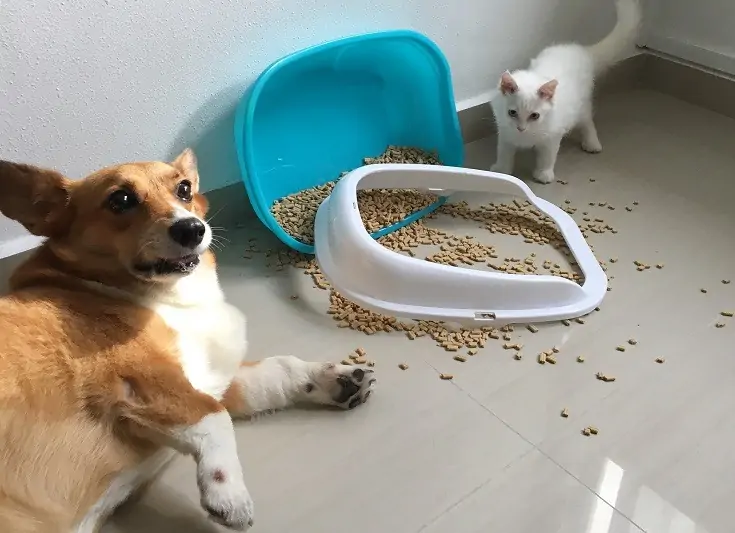
Has your dog ever shown a strange fascination for your cat’s litterbox? For many canines, a cat’s litterbox is like a box of gourmet chocolates.
Because cat food typically contains higher protein and fat content compared to dog food, the resulting feces seem incredibly appealing to our canine companions.
But the charm fades fast when you’re left to pick up the mess from an upturned litter tray, clean scattered litter, and—let’s be honest—dodge those doggy smooches for a while.
While your feline friend may not particularly care if her furry sibling helps clean out the litterbox, she might get stressed if her personal territory is constantly intruded upon.
Is It Harmful For Dogs To Eat Cat Feces? While it might sound disgusting, the occasional consumption of cat feces isn’t typically harmful for dogs. Both cats and dogs have comparatively shorter digestive tracts than humans, meaning they process food (and non-food items) swiftly, often too quickly for harmful microbes to cause trouble. Additionally, the highly acidic nature of their digestive system helps neutralize many bacteria.
However, this doesn’t mean that dogs are entirely immune to gastrointestinal infections or parasites from consuming feces or other unsavory items. It’s a rare occurrence, especially if it’s just the occasional indoor cat feces snack. But, if your dog stumbles upon cat feces outdoors, the risks increase, especially if they aren’t regularly treated for parasites. Regular veterinary check-ups and parasite prevention methods are key.
Cat Food Versus Cat Feces The composition of cat food is different from dog food, being richer in proteins and fats. While these elements make cat feces tempting for dogs, consistent consumption could lead to health issues. For example, due to their sensitivity to fats, some dogs could develop pancreatitis—a severe inflammation of the pancreas—if they ingest too much.
The Risks Of Cat Litter For Dogs The litter that clings to cat feces might pose a risk if ingested in large quantities. Designed to absorb moisture, it can cause blockages in a dog’s system. Although rare, some dogs might even be tempted by certain types of litter, especially if they’re made from organic materials like corn or wheat. If your dog is frequently invading the litterbox, consider switching to a non-food based or non-clumping litter type.
Training And Prevention While you can train your dog to resist certain temptations, a determined dog might still succumb to the allure of the litterbox when left unsupervised. The best way to prevent this is to restrict access to the litterbox.
There are various ways to ensure your cat can access its litterbox while keeping it out of your dog’s reach. Baby gates or special litterboxes designed with top entries can work wonders. Another option is an automated litterbox that cleans up after each use, removing the temptation entirely. If you’re feeling adventurous, you could even toilet-train your cat, though this comes with its own challenges.
In the end, the key is understanding and managing your pet’s behaviors, ensuring a harmonious and clean household for all.