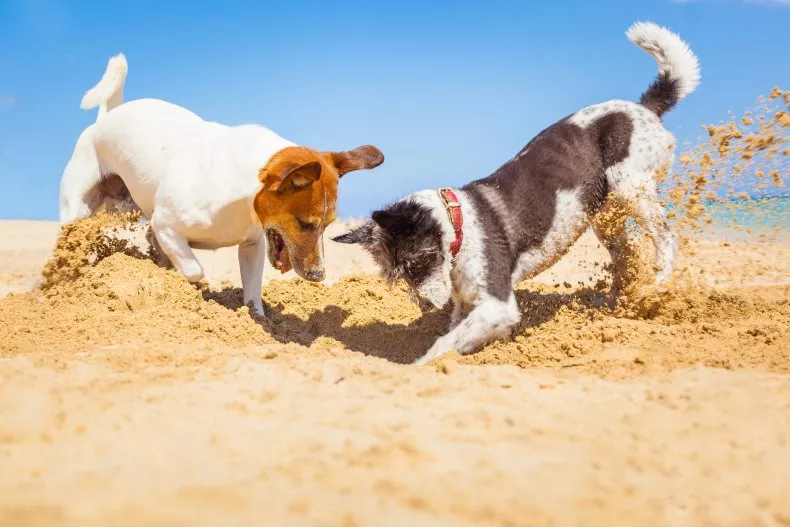
You might have observed your dog doing a little jig with their hind legs after they’ve done their business.
It’s a common sight, and many dog owners ponder if their furry friend is attempting to hide their waste. Sometimes, they might actually toss a bit of dirt or grass onto it, but frequently, it remains exposed.
So, are they trying to cover it up, and if they are, why aren’t they better at it?
Decoding the Post-Poop Dance Both Matilda and Cow have a habit of kicking up a storm post-evacuation.
Just today, Cow managed to step right into her poop while engaging in her after-poop shuffle. This isn’t a first for her. Generally, I try to guide her away before she begins her routine, but if I’m not swift, I find myself cleaning up her messy paws before letting her inside.
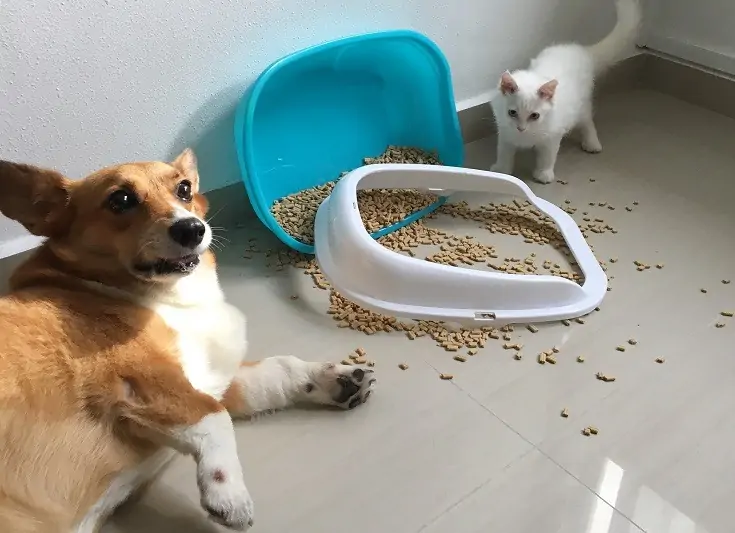
Now, comparing it to how effortlessly our cat buries its waste, it makes me wonder why dogs seem so inept at it.
We might not be able to converse directly with our pets, but by observing their habits, body structure, comparing with other animals, and the situation, we can infer their actions.
Marking Territory with Their Waste? Most of us are aware that certain dogs, particularly male ones, elevate a leg to urinate on upright objects, marking their domain.
But here’s a thing – feces, too, has its role in this territorial claim.
When dogs defecate, two glands around their rectum release a strong-smelling liquid. If you’ve ever caught a whiff of a peculiar scent when your dog’s anxious or thrilled, that’s the anal gland secretion.
This fluid is a unique identifier, akin to a signature, left behind by all dogs, regardless of gender.
Considering this, it’s logical for dogs to want their droppings to stand out instead of being buried. They aim to leave a mark that says, “I’ve been here,” stamped with their unique scent.
Some experts in animal behavior suggest that the post-poop kicking is their way of spreading this identifier further.
Scent from the Feet? Let’s talk about dog sweat.
Dogs possess two varieties of sweat glands. Apocrine glands, distributed throughout their body, release moisture into their hair follicles, ensuring their coat remains hydrated.
Merocrine glands, however, expel sweat straight onto the skin. While humans have these all over, dogs only have them on their feet. Therefore, dogs’ feet are the primary sweat spots. Few dogs might even leave moist paw prints behind.
One theory suggests that these merocrine glands also help in leaving scent markers. So, when a dog kicks after defecating, they might be enhancing their scent trail using the sweat from their feet.
The Energetic Spurts After Business If you’ve seen your dog go into an overdrive of energy, running in circles after a bath, you’ve witnessed the ‘zoomies’ or what’s scientifically termed as Frenetic Random Activity Periods (FRAPs).
This burst of energy often stems from a buildup of stress. Just as a bath can make them feel confined and anxious, relieving themselves can also reduce stress, leading to this burst of energy and perhaps the vigorous kicking.
More Kicks, More Dogs During our regular strolls, I’ve noticed that my dogs might do a small kick routine post-poop. However, in the presence of other dogs or in unfamiliar surroundings like a park, their kicking intensity increases.
For me, this underscores the idea that the kicking is a canine’s way of announcing their presence: “I’ve been here, and I’ve left my mark!”