
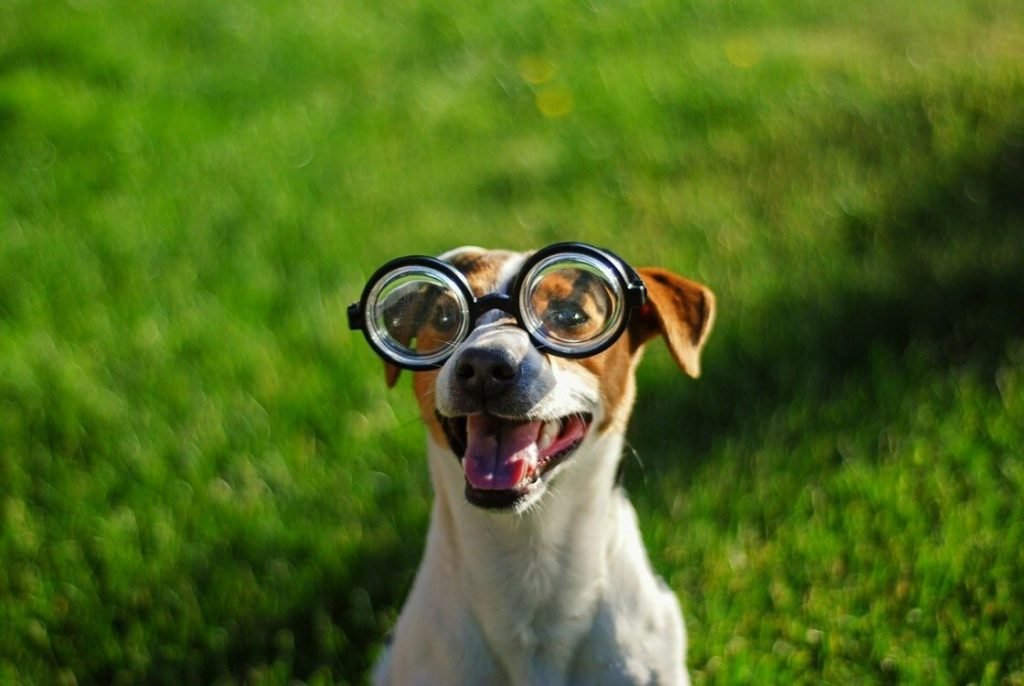
Approaching my eye surgery has led me to reflect on the vision of my own dog.
Interestingly, I was unaware that I suffered from strabismus until I was around 25. All through my childhood, I might have been dealing with a slight double vision that left me feeling drained and distracted. It was only when I began driving long distances that I sensed something was amiss.
To address the double vision I was oblivious to, I started wearing glasses with prisms. Oddly, my previous eye doctors never pointed out this condition. Besides this, my intense near-sightedness is undeniable. Without my glasses or contact lenses, I’m virtually blind beyond a five-inch distance.
In contrast, dogs can’t verbalize their visual problems.
While they aren’t tasked with reading, working, or driving, even minor vision challenges can affect them.
I often ponder over my dog, Cow’s eyesight.
For instance, Cow consistently collides with the screen door every time I open it. Clearly, she doesn’t perceive it. At night, she excitedly mistakes rocks or leaves for frogs, only realizing her mistake when she’s inches away. She also seems to take longer to recognize family members at the door compared to Matilda.
Despite these minor incidents, I’m not overly worried daily.
I’ve consulted the vet about her eyes. They mentioned an old scar from a previous corneal injury but found nothing alarming about her eyes. Cow’s eyes also have a blue hue, which the vet attributed to the lens’s color. I later discovered this is called Lenticular sclerosis.
With age, a dog’s lens might appear clouded or blue-ish. This can marginally affect their vision, but it’s usually harmless.
Recently, Matilda too has shown signs of these “old blues,” though she doesn’t seem visually impaired.
Just as many elderly humans start wearing reading glasses due to age-related lens changes, dogs too experience vision alterations.
Can Dogs Use Glasses? When inquiring how glasses are prescribed for infants, my optometrist mentioned a method involving pupil dilation and a light test. This indicates that, for dogs with serious vision problems, an evaluation can provide insights into their visual world.
While dogs typically don’t sport glasses, there are surgical and hard contact lens solutions for correctable vision issues. And some dogs, being entirely or mostly blind, depend on their keen sense of smell to explore.
For such dogs, there’s an ingenious device named Muffin’s Halo. It acts like a guide, similar to a cane for the visually impaired. This harness has a protective “halo” shielding the dog’s head, providing feedback upon contact. It’s quite endearing to see a petite dog using it.
A Dog’s Vision Perspective A person with 20/20 vision can distinctly view objects 20 feet away. On the other hand, a regular dog has a 20/75 vision. This implies that for a clear sight of what a human sees from 70 feet, a dog would need to be just 20 feet away. Essentially, dogs are nearsighted. The vision grade for an average dog would be -1.75, which isn’t too severe when compared to my -10.5.
Dogs perceive the world mostly in shades of yellow and blue due to their red-green color blindness. Using bold yellow or blue items can be beneficial, especially for older dogs. There are even tales of trainers using blue lip color or yellow apparel to maintain canine attention.
Nevertheless, if your dog constantly collides with objects, struggles to locate you, or gets disoriented in familiar spaces, it might be indicative of a deeper issue. Older dogs can face lenticular sclerosis, canine cognitive dementia, cataracts, glaucoma, and other problems. Don’t hesitate to consult your vet if you notice something unusual.