
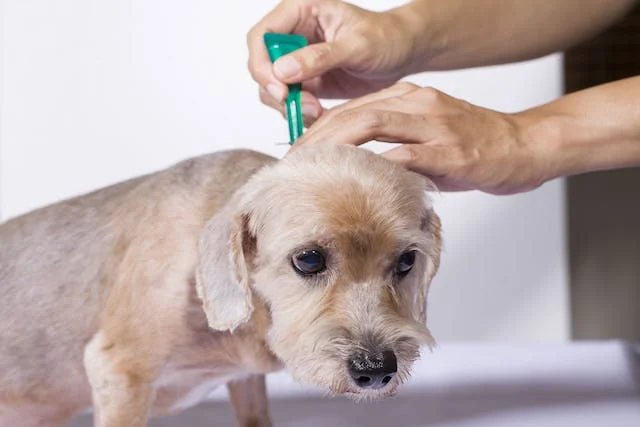
When I noticed a flea on Matilda’s tummy, I realized it was time to take immediate action.
We’ve had our battles with fleas in the past.
I often write about things on my blog that make me slightly uncomfortable.
This being Matilda’s second encounter with fleas makes me feel like I belong to the McPoyle family from It’s Always Sunny In Philadelphia.
Does that make us an unclean household?
However, sharing such stories can be comforting to others who’ve gone through similar situations. It’s not something one should feel shy about.
As a responsible pet owner, understanding that such incidents can occur is crucial. It’s all about how you tackle them.
Is Regular Flea Treatment Necessary for My Dog? Matilda was on a regular flea prevention routine the first time we encountered fleas, but not the second time.
We managed without standard flea treatments for around three years.
For some time, I avoided these treatments due to concerns about possible side effects. A lot of individuals who advocate for natural pet care believe that traditional flea and tick solutions can be harmful. We rarely encountered fleas in our usual walking spots, so I only used natural flea sprays when we visited parks or forests.
Strangely, last August, even though we mostly stayed indoors due to the pandemic, fleas became a concern.
Faced with a flea problem, I delved into research to discover:
If natural solutions would work for us If not, the safety of traditional flea remedies And, if suitable, which ones had minimal side effects Do Natural Flea Remedies Work? There’s a range of organic options to tackle fleas. I’m a fan. Unlike chemicals, it’s unlikely that fleas would become immune to these. However, they have their limitations.
They need to be applied every few days, especially before heading to bug-infested areas Some only deter and don’t kill. The ones that kill usually work only when wet; post-drying, they merely repel Strong fragrances in some can be bothersome. I enjoy cedar and clove scents, and some even remind me of Froot Loops. However, for those sensitive, they can be overwhelming, especially if used excessively
In our recent three-week flea invasion, I realized that while natural remedies were helpful, they weren’t entirely eradicating the problem.
“Vet’s Best” has a mix of clove and peppermint scents, suitable for both your home and dog. It’s economically priced (check current rate on Amazon).
Remember, fleas can linger on fabrics, carpets, or near the dog’s skin. But we noticed fleas even after indoor walks, implying they were latching onto my dogs from outside.
Neither our natural sprays nor collars seemed effective.
We tried TropiClean spray, which has a Froot Loop-like fragrance. While not fully effective on its own, it appeared to work better with other treatments. (Available on Amazon) I prefer it for bedding and such places where inhaling potential toxins is a concern.
Are Traditional Flea and Tick Solutions Risky? The FDA issued a warning about certain flea and tick chewables: Bravecto, Credelio, Nexgard, and Simparica, due to links with seizures.
However, there’s no evidence of seizure risks with spot-on products like Frontline Plus, though they can cause drooling and nausea.
Although some negative claims about various products circulate on social media, without verified proof, and with fleas tormenting my dogs, I opted for Frontline Plus for both Matilda and Cow.
Surprisingly, within three days, the fleas vanished.
Exterior fleas were deterred by the treatment, and interior ones lacked sustenance.
I continued with both natural and chemical sprays for the house. Chemical sprays often contain substances that inhibit flea growth and reproduction.
I used Pet Armor spray (check current rate on Amazon). After application, I’d keep my dogs distant for about half a day. For instance, I’d treat the bedroom during daytime and the living room in the evening. Having both natural and chemical sprays offers flexibility.
Remaining fleas in the house couldn’t reproduce, eventually leading to their eradication.
Can Fleas Affect My Dog or Me? Fleas might carry tapeworms, but a dog would only get infected if they consume the flea. Regular heartworm medications should prevent tapeworm infections. Regular fecal tests are crucial.
Thankfully, fleas aren’t particularly fond of humans, typically targeting feet and ankles. But knowing they were in my house was unsettling.
Fleas can transmit certain diseases, so it’s best to get rid of them promptly. If you tackle the issue as soon as you notice it, you’ll likely prevent bigger problems, but always consult with a doctor just to be sure.
Should I Use Dawn Dish Soap for Fleas? This is debated often. Does Dawn Dish Soap effectively eliminate fleas?
Indeed, it does. Fleas can be resilient, but Dawn works better than many dog shampoos.
Dawn commercials often show the soap being used on animals affected by oil spills, illustrating its potency.
While Dawn combats fleas, it can also dry out a dog’s skin, which could lead to other skin issues.
However, with a looming flea issue and their quick breeding, acting swiftly is essential.
If you have Dawn on hand and can’t immediately access flea shampoo, it’s a suitable short-term solution. I used it before purchasing a specialized flea shampoo.
When using Dawn, let it sit for around ten minutes. Dead fleas should start appearing, perhaps revealing a more significant infestation than expected.
If available, use a dog conditioner post-Dawn bath. Coconut oil can also be helpful.
So, What’s the Plan? I often switch between natural and conventional methods, believing both have their merits.
From my experience:
Opt for monthly treatments if you’re forgetful or live in flea-prone areas. Presence of wildlife like raccoons indicates potential flea threats. However, not all wild creatures bring dog fleas. Monitor your dog post-treatment. Generally, if there’s no history of reactions, using treatments is safer than risking flea-borne diseases. Use natural sprays like TropiClean along with spot-on treatments, but not simultaneously, to avoid confusing potential side effects. Shield your dog daily and reapply sprays for outdoor adventures. If possible, use specialized flea shampoos. In emergencies, Dawn can be used, but ensure aftercare for your dog’s skin. Act immediately upon spotting a flea. They breed fast, so the quicker you handle them, the better. Wash any fabrics your dog has been around and treat non-washables. Always review product labels. Certain essential oils might be toxic for dogs, so ensure safety before use. Use home sprays safe for dogs or ensure they’ve dried before allowing your pet near them.