It’s essential to reevaluate the things we consider routine.
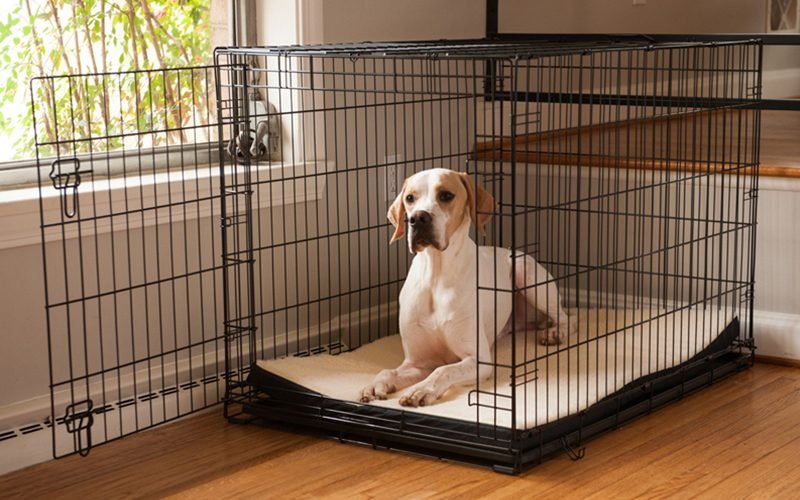
I was taken aback when someone mentioned in response to one of my articles that they viewed crating dogs, especially during potty-training, as inhumane.
Every dog specialist or training guide I’ve encountered has advocated crate training and its use to mitigate undesired behavior.
It seems crating is an accepted norm among dog enthusiasts.
However, I seldom shut my dogs in a crate.
Actually, I had to stow away their crates recently to accommodate our new cat’s essentials.
To clarify, I don’t find crating inhumane per se. I do believe, however, that it’s a method we sometimes apply without much thought.
Do Dogs Naturally Seek Dens? Experts argue for crate training by pointing out that dogs are naturally inclined to seek dens. They instinctively find a snug spot and naturally try to keep it clean.
Hence, most dogs refrain from soiling their crates, which aids in potty-training.
I consent to receive emails and tailored ads. But what about wild canines or their ancestral relatives, the wolves?
Reflecting on the most untamed dogs I’ve encountered – the Chihuahuas dominating my Californian town’s streets – they seemed to favor the great outdoors. They’d audaciously nap in roads, sometimes with dire consequences.
These audacious dogs weren’t hiding; they confidently occupied the streets. However, more docile ones might have opted for more secluded rest spots.
And wolves? They indeed create dens, mostly for rearing their young. But as these pups grow, the pack might sleep openly or in expansive shared dens.
Wolves, much like those confident street dogs, would not willingly lock themselves in a confined space.
In essence, while dogs might find comfort in den-like settings, it’s a leap to say they’re naturally inclined to be confined in crates.
The Necessity of Crating Sometimes Though dogs aren’t inherently ‘crate creatures’, many can benefit from occasional crating.
It can protect them from potential dangers like electric shocks, ingesting toxic substances, conflicts with other pets, or darting outside.
Crates can be a sanctuary for a nervous dog during stressful situations like loud noises or unfamiliar faces.
Should Crates Be Punishment? A crate should signify safety, not punishment. It can help curb undesirable behavior but should never be used as a disciplinary tool.
Yet, when emotions run high, crating can be beneficial. Taking a moment to collect ourselves ensures we don’t act out of frustration.
Dogs, in their adaptability, can grow to find solace in their crate.
For some, it’s an essential aspect of their early years and may continue depending on the household dynamics.
Most dogs would love the freedom to enter or exit their crate at will. But then again, many would also chase after cars or tussle with the neighborhood cat.
Crating can set safe boundaries. It’s a logical choice for many.
Could Opting Out of Crate Training Be Harmful? Pamela Douglas, a dog enthusiast and blogger, has a compelling take: mastering the art of being calm in a crate is a handy skill. There may be instances, such as vet stays or surgeries, where confinement is unavoidable.
While regular crating might not be part of their routine, familiarizing them with the environment reduces potential stress.
When Does Crating Become Excessive? Dogs, especially adults, sleep for nearly 13 hours daily.
Being caged, they have no autonomy over their needs, and hydration might become an issue.
Some can endure a whole working day in a crate, but that doesn’t mean they’re comfortable. Their inability to communicate their discomfort or needs is a challenge.
However, being a home-based worker, I’ve seldom faced the dilemma of leaving my dogs alone for extended periods.
Ensuring access to water, regular restroom breaks, and interactive stimuli is crucial. Long-term, it might be wiser to confine them to a safe room rather than a crate.
In our journey as dog owners, our objective is not to do just enough, but to provide the best within our capacities.
As I pen down my thoughts, my goal is never to cast blame but to inspire reflection and foster an even deeper bond with your furry companion.