If you’re just joining us, allow me to introduce Matilda, my petite Chihuahua mix, weighing in at five pounds. Then there’s Cow, tipping the scales at 30 pounds. A DNA test revealed she’s a mix of Chow-Chow, German Shepherd, Jack Russell, and Cocker Spaniel.
Interestingly, Matilda can get away with certain behaviors that Cow can’t.
Determining what rules and limitations to set for your canine companion is a deeply personal decision, and these rules can evolve over time.
While some individuals prefer their dogs to always walk on the left, restrict sniffing to command, and eat only on cue, others might be more lenient in certain aspects but stricter in others. In homes with multiple dogs, like mine, the rules might differ between them.
Here’s a peek into what I call Matilda’s “small dog perks.”
- Indoor Potty for Matilda Living in an apartment means we take around 4-5 leashed strolls daily. Cow always answers nature’s call outdoors and has only had an indoor mishap when unwell. I don’t recall going through a rigorous house-training regimen with her.
Interested in More Small Dog Insights? Stay informed with the latest updates and insights from Small Dog Tips directly to your email.
First Name Your Email… SUBSCRIBE
By signing up, I accept emails and tailored advertisements.
In contrast, house-training Matilda was a challenge, with numerous early slip-ups. By her first birthday, she was largely outdoors-trained, signaling her needs with potty bells.
Yet, during unfavorable weather or late at night, she’d sometimes err.
If you’ve trained both big and small breeds, you’ll recognize that their house-training experiences diverge. Petite dogs, like Matilda, often grapple with bladder and bowel control.
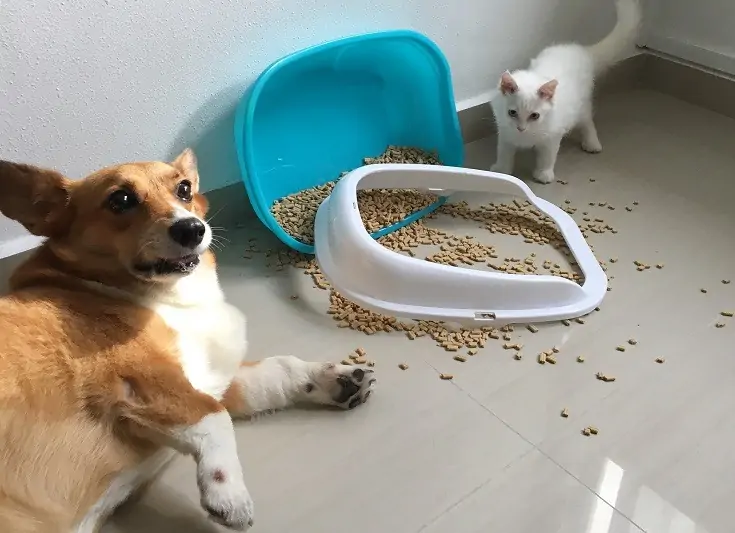
Currently, Matilda has an indoor restroom corner in my bedroom adjacent to the cat’s litter box. She sparingly uses it, especially in warmer months. Her small waste is almost scent-free, which I clean immediately, followed by sanitizing the area.
This arrangement suits us, but I understand if some might cringe at the thought. Some firmly believe dogs should only relieve outdoors post-puppyhood, which is perfectly valid.
For us, this ensures Matilda stays accident-free, even on challenging days.
Regular outdoor walks usually keep dogs like Matilda preferring the open over the indoors. However, having an indoor option is a convenient fallback.
- Matilda’s Jumping Privilege Dogs jumping up to greet with their forepaws is often labeled as “poor etiquette.”
Cow isn’t allowed this due to the discomfort her claws can cause. Instead, I’ve trained her to nudge me with her snout to grab my attention.
For Matilda, hopping up is one of her primary ways to signal her needs – be it a bathroom break (especially if her bell is out of reach), hunger, a lift, or to convey her displeasure with Cow.
- Bedtime with Matilda Smaller breeds often face challenges preserving body warmth due to their surface area ratio. Many are also naturally predisposed to being close-companion breeds, desiring constant contact.
Though Cow has occasionally shared my bed, her restless sleep habits – complete with running, kicking, and sometimes barking – aren’t conducive to a restful night.
Furthermore, I feel more secure with Cow stationed in the living room, alerting us to any unwelcome guests. Her size might also act as a deterrent for any potential intruders.
Cow seems content resting in her crate adorned with one of my old comforters, making it plush and possibly retaining my scent.
In conclusion… Establishing guidelines and boundaries is about curating a harmonious, safe, and pleasant living arrangement with your furry friend. It doesn’t matter if others have different rules or if yours might seem inconsistent at times. Dogs aren’t tallying points; they’re simply loving their humans with all their heart.